We care about your data, and we'd use cookies only to improve your experience. By using this website, you accept our Privacy Policy


 Optimize Staffing: Access Bundle Staffing & Secure Surety Shifts to Transform Care.
  Love at First Sight Staffing: The Only Risk-Free Nurse Solution. Guaranteed.
Optimize Staffing: Access Bundle Staffing & Secure Surety Shifts to Transform Care.
Love at First Sight Staffing: The Only Risk-Free Nurse Solution. Guaranteed.
Love at First Sight Staffing: The Only Risk-Free Nurse Solution. Guaranteed.
Optimize Staffing: Access Bundle Staffing & Secure Surety Shifts to Transform Care.
Love at First Sight Staffing: The Only Risk-Free Nurse Solution. Guaranteed.


🏰 From Institution to Invitation: Auditing Your "Front Door" Experience
This blog is an essential component of your Monthly Administrator Review of the "Front Door" Experience.
The moment a visitor—be it a family member, a prospective employee, or an unannounced state surveyor—steps onto your property, an immediate, visceral judgment is made. If the atmosphere is dominated by loud alarms, visible security apparatus, and confusing signage, the message is clear: This is a prison atmosphere, not a home. A poor "Front Door" experience dramatically reduces the perceived Star Rating of any facility, regardless of the quality of care inside.
It’s time to move beyond simple decor and focus on sensory calm and deliberate welcome.
Phase 1: Muting the Noise and Eliminating the Alarm Fatigue
Excessive noise and jarring alarms are stressful not just for visitors, but for residents and staff, leading to anxiety, sleep disruption, and "alarm fatigue." The goal is to establish a calm state from the moment of entry.
Phase 2: Softening the Security and Signage
While security is paramount, it should be felt in its effectiveness, not its appearance. Locks and signs that scream "Containment" negate the "homey" atmosphere.
Phase 3: The Outdoor Welcome—A Resident's Right
Your exterior should be the first invitation, not an afterthought. Long-term care facilities are home, and the first impression must be one of genuine comfort.
Monthly Review Action Item
As part of your next administrator review, take the "Guest Journey Test." Approach your building as a first-time visitor.
By addressing the sound, the signs, and the seats, you transition your facility's first impression from a stressful checkpoint to a genuinely inviting and calm home.
Would you like a template for a simple checklist to conduct this "Guest Journey Test" during your monthly administrator review?
📋 Monthly "Guest Journey Test" Checklist
Purpose: To audit the facility's exterior and reception area from a visitor's perspective, focusing on sensory experience, security presence, and overall warmth.
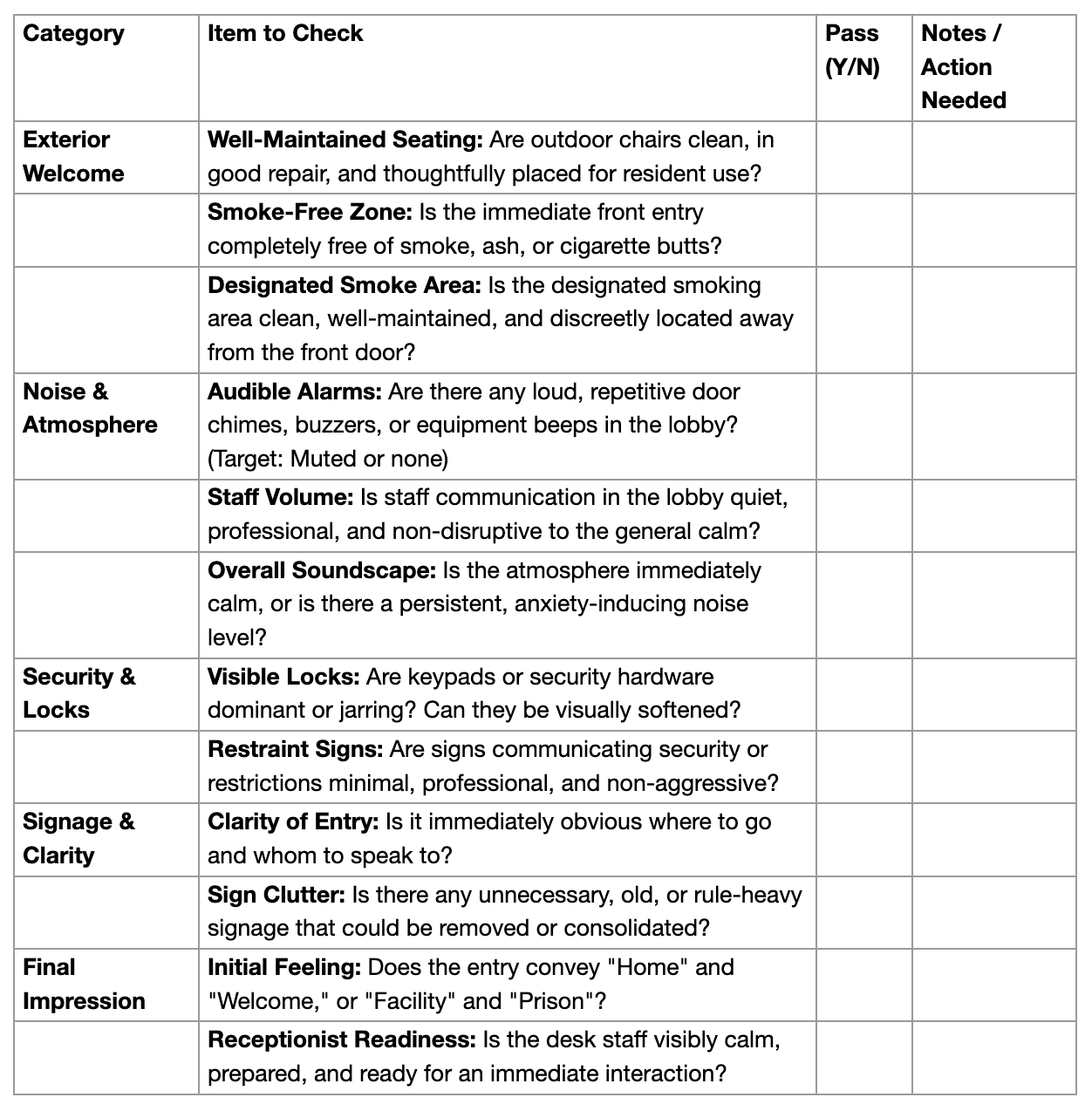
Review Summary Action Plan
Using this checklist ensures your commitment to elegance and poise starts right at the door.
We commit to provide excellent service and competitive staffing rates. Please allow 24-72 hours for staffing rate quotes.